Configuring CITSmart Instance for Mobile Access
This document is intended to provide guidance for configuring the server by using CITSmart Experience Mobile Application (iOS and Android platform).
Before getting started
It is necessary:
To have the deploy CITSmart Web in version 7.2.2.0 or higher;
To configure the parameters 257 and 272 must be:
- Values: "Y" or "N" Default: "N";
- If the value of the parameter is "Y", only notifications of requests without a current controller can be shown;
- If the value of the parameter is "N", notifications of all the requests can be shown.
The parameters 254 (system parametrization), 255, 256, 258, 267, 284, 285, 286, 350 also must be configurated.
Configuring web services
Configure CITSmart Web Services to access the functionality of the CITSmart Experience application.
- On CITSmart Experience Web, access the Web Services feature for the mobile (System > Settings > Mobile > Citsmart Mobile Web Service);
- Click on the "Link Groups" tab and link the activity executing group to the CITSmart Experience Web Services.
✅ Rule: At the time the group is selected, it will be linked to all CITSmart Experience Web Services in an automated way.
Installing GlobalSign Intermediate Certificate
In order to recognize the intermediate certificate of the GlobalSign (Digital Certification Issuer), it must be installed. Follow the procedures below:
- Access the following address: https://support.globalsign.com/customer/portal/articles/1464460-domainssl-intermediate-certificates;
- Download the first certificate, as shown in the figure below:
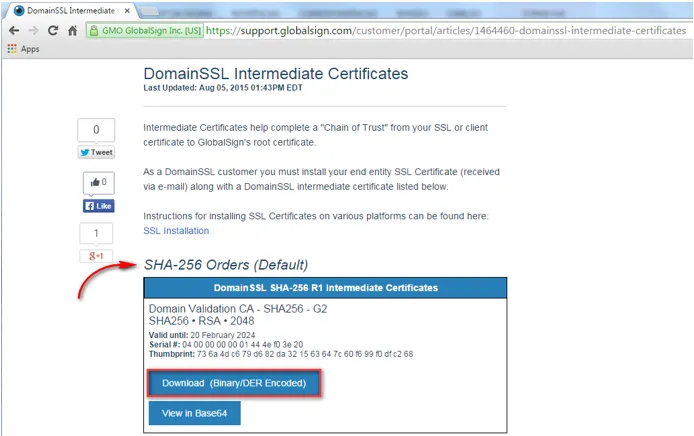
- On mobile: you will be asked to install the certificate, just enter the generic name (suggestion: GlobalSign) and click on forward.
- On desktop: right-click the downloaded certificate (as shown below), click on install certificate, and proceed to finish.
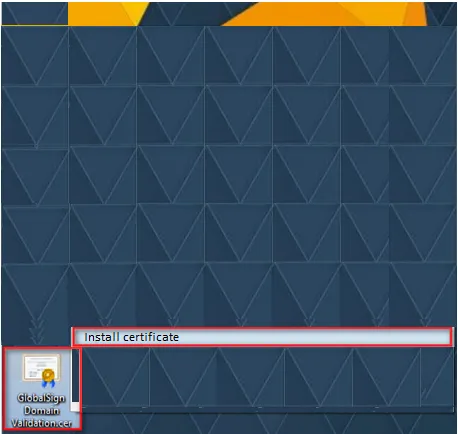
3. Once installed, simply change the application's address to "https://citsmart.centralit.com.br/citsmart".
Android and iOS App Installation
- Go to Store (Play Store or App Store) to download the CITSmart Experience Mobile application;
- Search for CITSmart Experience and after the search, select the application;
- Press the "Install" button to download the application.
Creating Key for use and consumption of Google APIs
In order for the use and consumption of the Google APIs to be possible, a Key API must be created. For this, the following steps must be followed:
⚠️ Attention!
To perform these procedures, you must be logged in with a Google account.
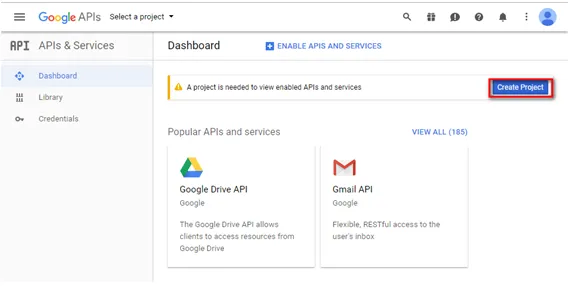
- Click "Create Project", as shown in the figure below:
3. A window will appear, as shown in the figure below, to inform the data of the new project;
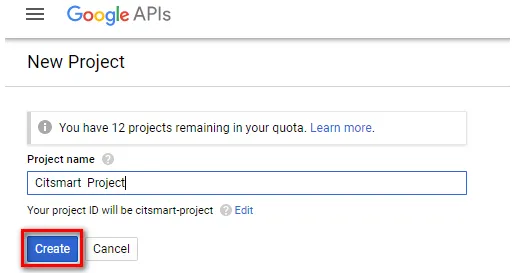
4. Enter the name of the project and click on the Create button to create the project.
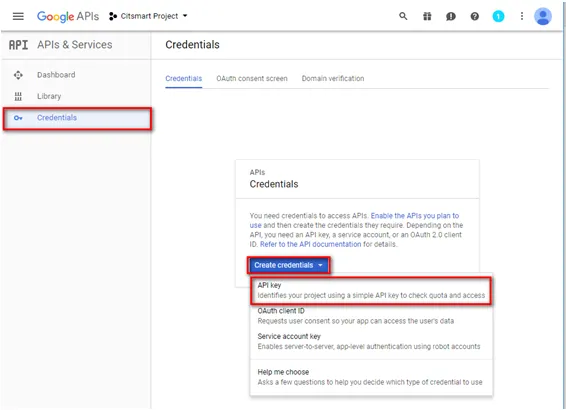
5. After creating the project, click APIs and Services. Create the API Key, by clicking on APIs and Services > Credentials > Create Credentials > API Key, as shown in the figure below:
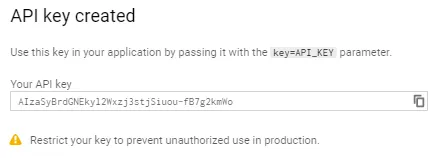
6. Once this is done, the API key will be displayed:
7. Choose the menu option that best suits you. For more information on which key will answer you, go to https://developers.google.com/console/help/new/#generatingdevkeys
8. After the keys are created, the APIs can already be consumed.
APIs to be used in the solutions
Below is the Google APIs to consider in the solutions:
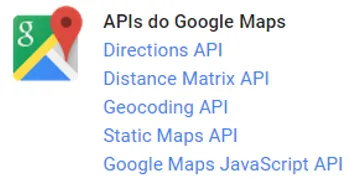
- Directions API: the Google Directions API is consumed through HTTP requests. This API calculates directions between two points informed, the source and the destination, having several other options.
For more information about using this API, access: https://developers.google.com/maps/documentation/directions.
- Distance Matrix API: the Google Distance Matrix API allows the retrieval of arrays of distances between two points, that is, returns approximate results as well. The difference for the Google Directions API is that the Distance Matrix does not return such detailed information as the steps to be performed.
- For more information about using this API, access: https://developers.google.com/maps/documentation/distancematrix.
- Geocoding API: the Google geocoding API is an API that helps you retrieve geographic positions by sending an extended address as an argument. The consumption of the API is done by HTTP and the results can be obtained in XML or JSON.
For more information about using this API, access: https://developers.google.com/maps/documentation/geocoding.
- Statics Maps API: the Google Static Maps API will be used in cases where interaction will not be required as a map, but only as a view. It is interesting to use since it is lighter since it is not necessary to download JS resource and images that will not be used.
- For more information about using this API, access: https://developers.google.com/maps/documentation/staticmaps.
- Google Maps JavaScript API: the use of the API is done through a JS API. For your use, simply link to JS on the page that will use the maps.
- For more information about using this API, access: https://developers.google.com/maps/documentation/javascript
Activating an API
To enable an API for use, proceed as described below:
- After performing the steps described in the "Creating key for use and consumption of Google APIs" section;
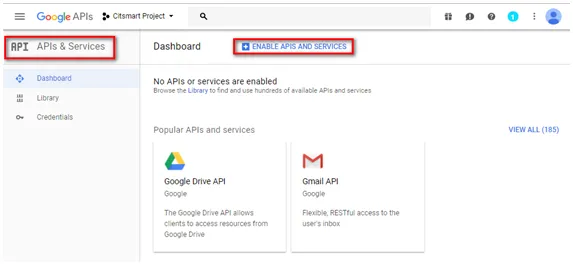
- Click on APIs and Services > Enable APIs and Services, as shown in the figure below:
3. The API library will be displayed. Select the API you want to enable (the figure below represents an example of API) and click on the "Activate API" button as indicated in the figure below:
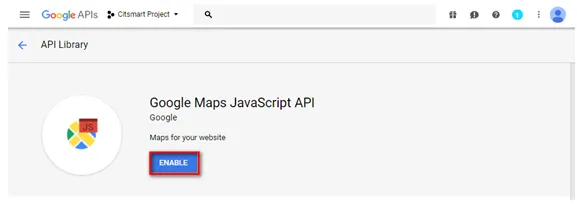
4. Once this is done, the API will be enabled for use.