Low Code Application
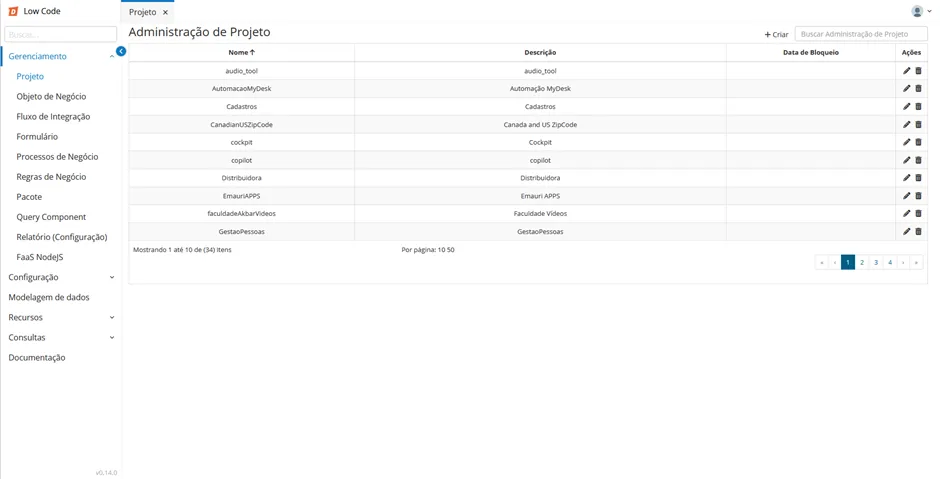
A Low Code application is a set of integrated elements that provide functionalities that can be used individually (stand-alone) or integrated with Workflow and ESM (ITSM) or legacy systems.
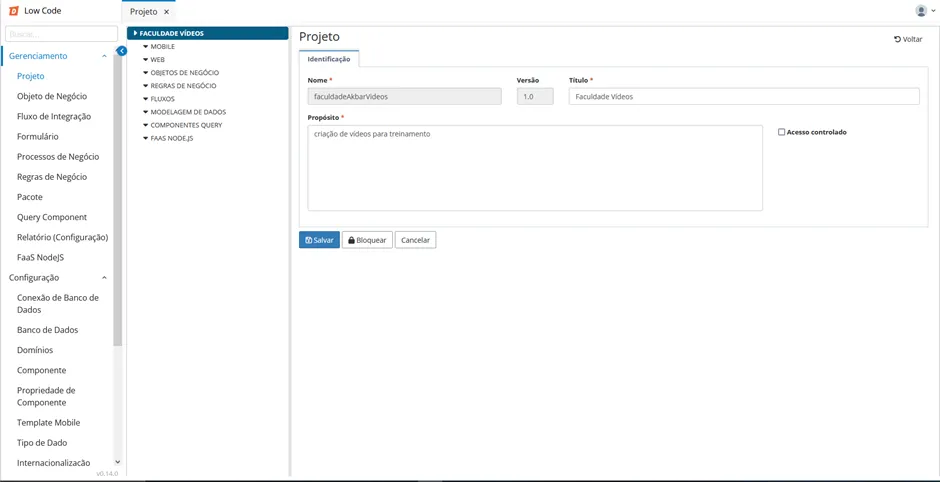
The elements of a Low Code application are:
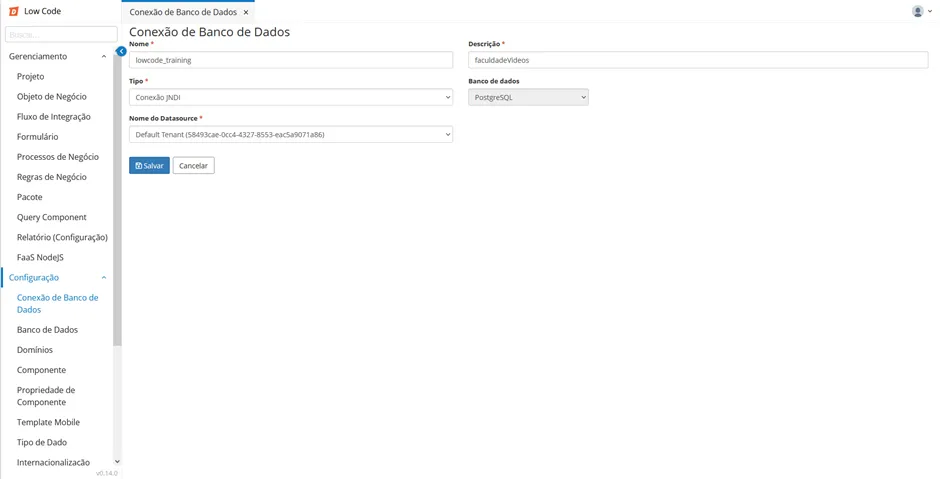
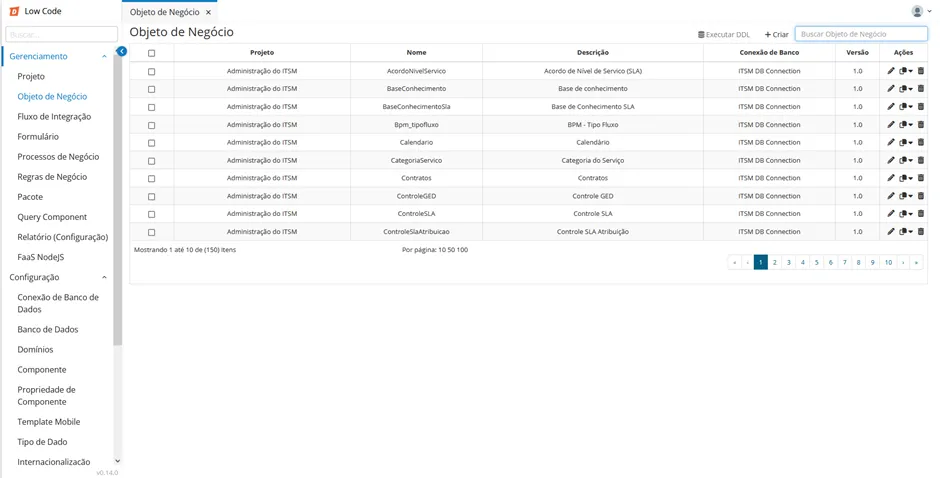
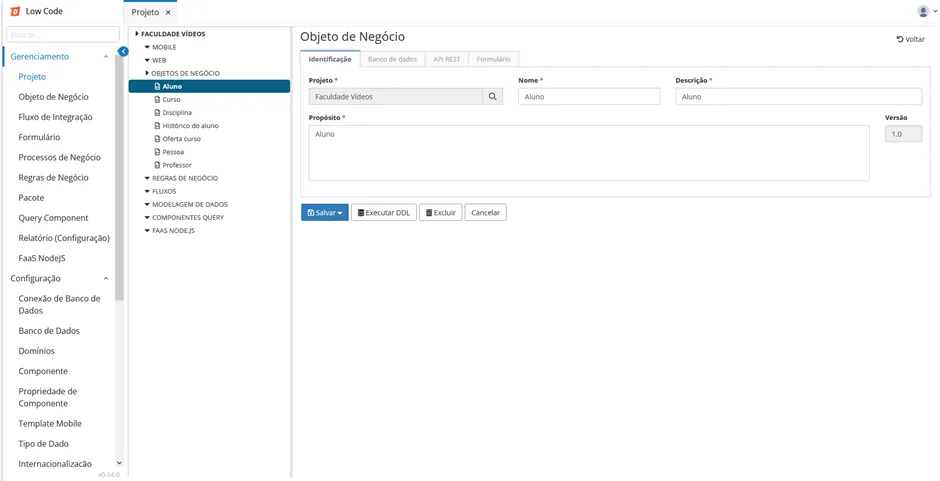
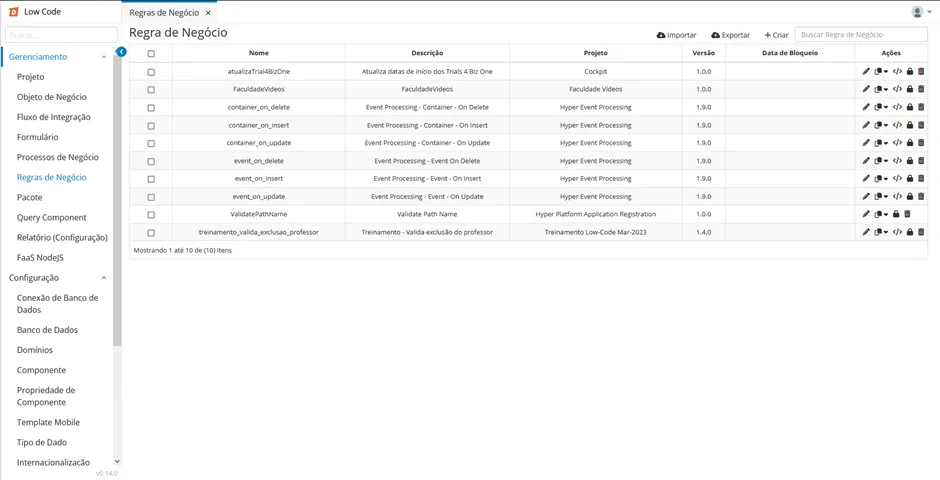
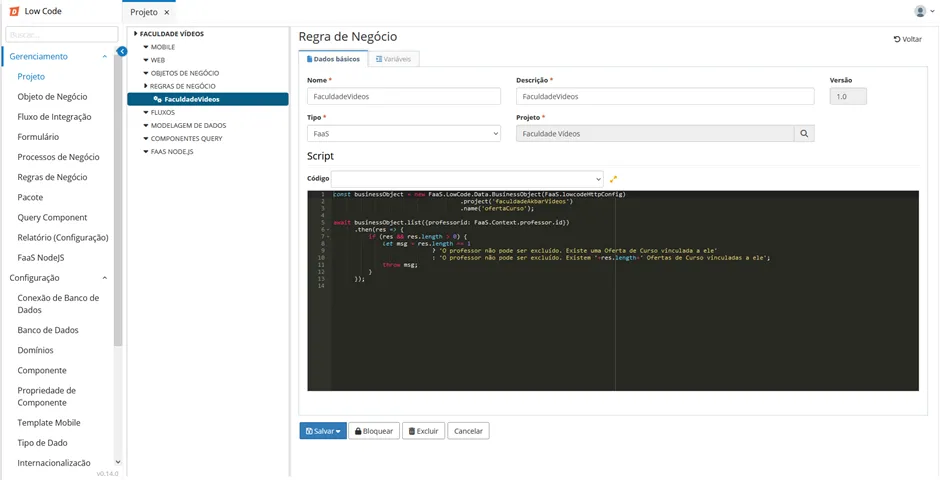
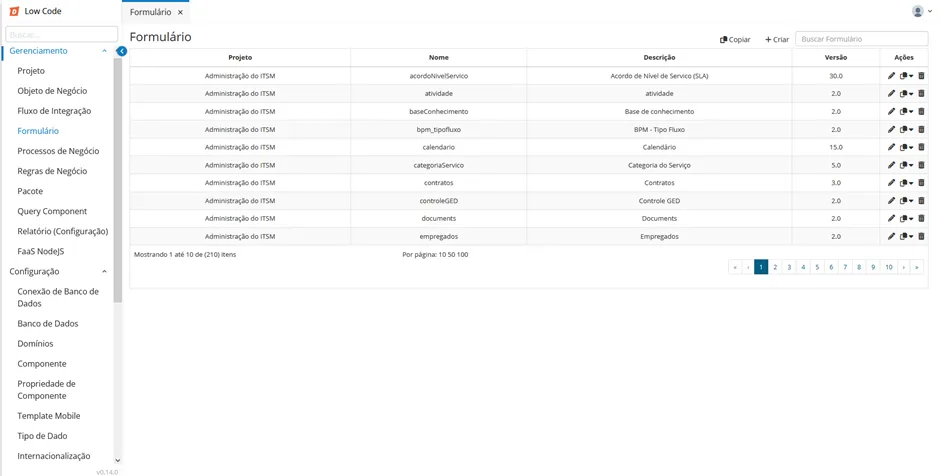
Stages in Low Code Application Implementation
The Low Code Implementation process involves several stages that should be followed for better utilization of the tool's resources.
APP Design
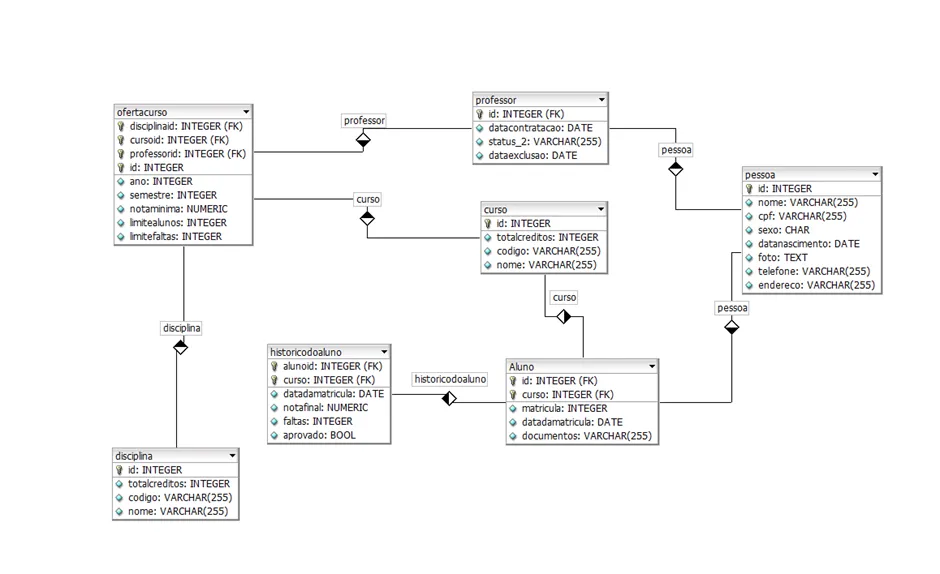
For better development of Low Code applications, it is necessary to design the needs and requirements that the application will fulfill. It is essential to include the Entity Data Model (ER / DER) that the application will use. If the application consumes or generates data for services, the designs of the services should also be included.
Low Code Configuration
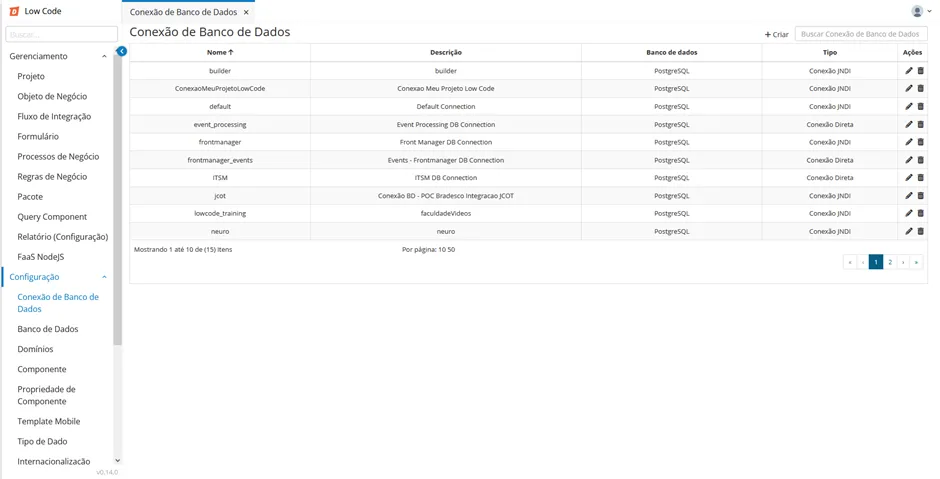
After designing the application and gathering information regarding the data entities for your Low Code application:
- You can also implement Business Rules for the inclusion, update, or deletion of records in the data entity. You can use them in Integration Flows and the dependencies of Business Objects;
- If you have forms that will use multiple languages, you can create the Translation Keys, which are labels used for all fields in your Forms.
Low Code Development
The configuration stage will prepare us to develop the application to:
- Create the Integration Flows, containing the data structure of the entity (tables), where it will be possible to create attributes (fields) and assign PK's and FK's relationships with other entities, link Business Rules, and create CRUD Forms and other resources;
Uses of a Low Code Application
After creating your Business Objects and Forms, you can:
Link the form to a service of Workflow and ESM (ITSM),
Register an application and link the FORM to the Main Menu.
Glossary
Entity-Relationship Model (ER/DER)
Entity-Relationship Model (ER) and Entity-Relationship Diagram (DER) are terms used in Low Code development to represent and visualize the structure and relationships between entities in a database system.
Entity-Relationship Model (ER)
It is a conceptual representation of the entities (objects) of the system, their attributes, and the relationships between them. ER is used to design the basic structure of the database, defining tables, columns, and the associations between them.
Entity-Relationship Diagram (DER)
It is a visual representation of the entity-relationship model. DER uses graphical symbols, such as rectangles for entities, lines for associations, and diamonds for relationships, to illustrate the structure of the database in a clearer and more understandable way. It helps visualize the entities, their attributes, and the relationships between them.
Service Designs
These are diagrams or visual schemes that illustrate the structure and interactions of a service. They can show the different endpoints (access points) of the service, the available operations, the input and output parameters, as well as possible responses. These designs help communicate the functionality and interface of the service clearly and comprehensibly to developers and users who want to interact with it.